Top Career Opportunities After MSc in Forensic Science: Jobs, Roles & Scope
Wondering what to do after your MSc in Forensic Science? This degree provides the opportunity to work in the world of crime investigation and support of the justice system. With growing crime rates and better labs in India, the MSc Forensic Science career scope is strong and steady for fresh graduates. In this article, you will find the list of top career opportunities after completion of masters in forensic science, including jobs, roles, scope and more. Continue reading.
Why is Forensic Science a Good Major?
Forensic science is a combination of science and law that studies crime scene evidence. Once you have done your MSc, you handle how to deal with things such as DNA samples, fingerprints and chemical tests. In India, the demand is on the increase due to the need by the police and the courts to have fast and precise reports of the cases, whether it is murder, cyber frauds and the likes.
Thousands of people are employed in the field in government laboratories, commercial companies and hospitals. There are more than 500 forensic laboratories in the country, which open annually. If you like puzzles and science, MSc Forensic Science career scope offers stable jobs with respect in society.
Top Job Roles After PG
MSc forensic science job roles vary from lab work to field investigations. Your skills are applied uniquely to each role, which makes the work fresh. Here is the list of top job roles you can opt for after MSC forensic science:
Forensic Scientist
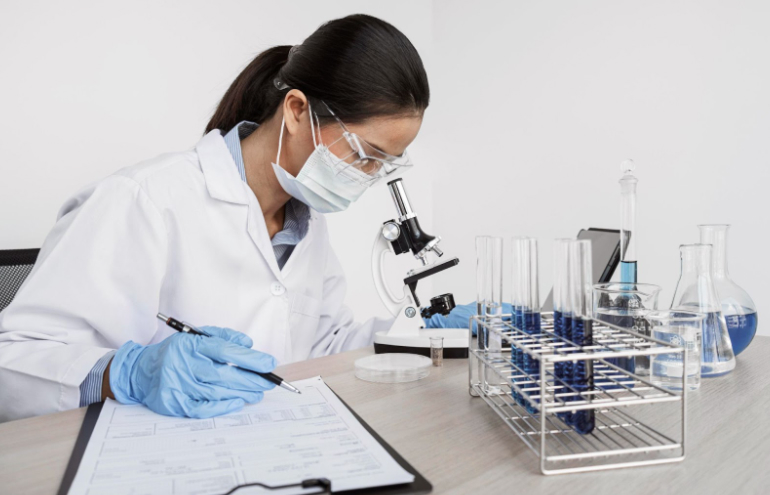
Forensic scientists work in labs testing items from crime scenes like blood, hair, or cloth pieces. They use microscopes and chemicals to find clues such as DNA or fingerprints. You write clear reports for police and courts, often handling many cases in a day. This job fits those who like careful lab work and solving puzzles with science.
Crime Scene Investigator
Crime scene investigators arrive at the crime scene shortly after it occurs. They shoot photographs, make maps, and take samples such as weapons or marks without moving them. You put gloves on and adhere to strict rules in order to preserve evidence in court. It is an outdoor work that requires speed of thinking and fitness, and involves travelling to various locations.
Forensic Analyst
Forensic analysts check one type of evidence deeply, like matching bullets, DNA samples, or phone data. They run machines to get results and double-check for mistakes. Your daily work mixes lab tests and computer analysis for police cases. It's great for people who focus on details and enjoy tech tools.
Investigation Officer
Investigation officers are the heads of cases that are solved to the end. They strategize, interview witnesses, investigate laboratory reports, and compile files to be used by lawyers. They are employed with the police or other agencies such as CBI and occasionally go to scenes. This job requires the ability to talk and make decisions in times of stress.
Forensic Toxicologist
Forensic toxicologists identify drugs, poisons or alcohol in a body sample of a dead person or a suspect. Special machines are utilised by them to quantify small amounts and justify whether it resulted in harm or not. The majority of work is held in the labs, assisting the doctors and courts in the cases of poisoning or accidents. This also requires good grasp in chemistry.
Forensic Ballistic Expert
Forensic ballistic investigators analyse guns, bullets, and marks of firing. They experiment with weapons in harmless ranges, identify shells with guns, and locate distances of shooting. Reports are taken to the court in order to establish who fired shots. The job comprises a combination of lab tests and some field work which is ideal to individuals who are interested in weapons.
Digital Forensic Expert
Digital forensic experts examine indicators of crime, such as hacked data or spoofed messages, on phones, computers, or email accounts. They retrieve deleted files and monitor Internet usage without altering them. These experts work closely on fraud or terror cases due to the increase in cybercrimes. It is appropriate for tech-savvy graduates who are fond of software and devices.
Forensic Document Examiner
Forensic document examiners verify papers, signatures or wills as fakes. They rely on lights and magnifiers to see the variation in ink, printing or handwriting. If you choose this job, you’ll have to assist banks or courts in fraud cases such as forged cheques. This office work requires keen eyes and fineness to minute details.
Forensic Biologist
Forensic biologists examine body fluids, vegetation or animal impressions on a scene. They examine semen, saliva, or bones in terms of DNA and type of species. Reports on rape or wildlife crimes are sent to you by labs. MSc biology skills are used here in pairing people with evidence.
Lab Manager
Lab managers manage forensic labs, including personnel, equipment, and routine tests. They take orders, train new individuals, and monitor compliance with regulations. You ensure that samples run quickly and securely. This is a leadership position that follows experience, which is good in organised types.
Forensic Photographer
Forensic photographers are those who capture clear images and videos of crime scenes, bodies or evidence. Special cameras are employed when taking low light shots or close up shots of wounds. Photos allow the investigators and courts to view what occurred. It is an art and science, which requires a steady hand.
Quality Control Analyst
Food, drugs or products are tested by quality control analysts in their own laboratories to determine the presence of poisons or fakes. They examine whether products are safe in terms of chemical tests. You are employed by companies such as hospitals to prevent health risks. This is a stable employment that employs non-police forensic techniques.
Note: These MSc forensic science job roles give good openings in government or private agencies. Choose one according to your preferences. Additionally, there are some emerging roles that will become the top career opportunities in the future, consider them too.
Emerging Job Scopes Following MSc Forensic Science
In addition to the usual positions such as forensic scientist or crime scene investigator, MSc Forensic Science graduates have an opportunity to consider these more little-known, emerging job roles in India and around the world. These new scopes emerge because of the emerging technologies such as AI, cybercrimes, and health demands in India. Their growth is good since forensic laboratories are modernising and the private sector is growing. All of them fit your skills you gained during masters but additional training or certifications are needed.
Forensic Anthropologist
Forensic anthropologists examine old bones and skeletons in order to determine the age, sex, or cause of injury. You make faces or match remains to missing individuals with 3D scans. In India, this blossoms with CBI or railways flood or accident recoveries. Work combines fields and laboratories, aiding in the identification of victims when DNA does not work.
Trace Evidence Examiner
Trace evidence examiners study minute evidence such as paint chips, glass fragments, or soil at the crime scene. You apply microscopes to associate things with cars or locations. Less popular but essential on a hit-and-run or burglary. FSLs are employed more often now with more sophisticated tools, which are appropriate to those who like detail and see what others cannot.
Forensic Entomologist
Forensic entomologists use insects on a dead body to determine the time of death or place of death. Insects such as flies provide hints according to life cycles. Growing in India to solve rural murders or wildlife related cases. You are employed in CBI or zoos, and you are mostly outside, requiring your MSc. degree in biology.
Wildlife Forensic Expert
Wildlife forensic investigators examine animal skins such as tiger or ivory to provide evidence of poaching. They analyse DNA or chemicals in order to track illicit trade. In the case of the tiger projects in India, this is germinating in NGOs such as WWF or forest department. Court evidence against smugglers is required in labs in Delhi or Gujarat.
Forensic Accountant
Data tools are used by forensic accountants to unravel money trails of fraud, scam, or tax crime. You see forged books or money-laundering. Increase in banks and ED with cyberfraud. Your technique of science suits audits; private companies educate you in a hurry on corporate work.
Forensic Psychologist
Forensic psychologists profile criminals or test the mind of suspects to be fit in court. You learn how behaviour occurs in crime patterns or witness lies. First in Indian courts in cases of terror or serial cases. Police schools recruit to train; needs psychology elective though MSc logic assists.
Forensic Odontologist
Bodies or bite suspects are identified by forensic odontologists using teeth marks or dental records. You compare disasters or rapes X-rays. Uncommon but post-COVID identifications. Connection with AIIMS or dental colleges; fits those who prefer to solve special lab puzzles.
Bloodstain Pattern Analyst
Bloodstain pattern investigators examine blood splatter at the crime scene to trace attacks or locations. You count angles and kinds as sprays. Indian police FIRs training programmes increase. The essential to murder reconstructions in high courts, field-lab mix.
Forensic Audio/Video Analyst
Forensic audio/video experts improve CCTV, telephone, or deepfakes to provide evidence of tampering. You remove noise or cheque voices. Social media crimes are rising.. States such as Karnataka recruit cyber cells; MSc technology is seen to shine here.
Disaster Victim Identification Specialist
Identification of disaster victims specialists deal with mass deaths on trains or quakes, with the help of DNA and records. You organise teams on fast IDs. New post-2020 developments; NDRF or UN functions. Time-consuming and yet rewarding to humanitarian forensics.
These posts are vacancies in India 500 plus labs and emerging cyber units. Enter with short courses or internships. They are offering diversity and will grow with technology by 2027.
Government Employment: Stability and Favour.
Government jobs after MSc Forensic Science are popular for their security and benefits. The major agencies such as the Central Bureau of Investigation (CBI) hire lab analysts to analyse evidence of major cases. Examiner jobs are available at State Forensic Science Laboratories (FSL) in such locations as Delhi, Maharashtra, or Gujarat.
You can also join intelligence-related probes or forensic teams in the Indian Army and police in the Intelligence Bureau (IB). The process may involve passing exams such as the UPSC, SSC, or state PSC exams. The initial salary is based on the 7th Pay Commission, and the posting is mostly in a city with large laboratories, such as Hyderabad, Chennai, or Kolkata.
These positions offer pensions, housing allowances and training programmes. Numerous graduates begin their long careers in the public service after internships.
Private Sector: More Growth and Flexibility.
Companies that are privately owned provide faster access and experience. Forensic science career opportunities in this space include DNA testing labs like Truth Labs or private FSL partners. Post-mortem analysis requires the services of forensic experts, and background check and corporate frauds are dealt with by detective agencies.
Forensic accounting is employed by banks and insurance companies to track financial crimes. These are the jobs that are characterised by travelling, introduction of new tools such as evidence-tracking software and accelerated promotions. The private positions are appropriate to individuals who desire flexibility and competence development without having to wait long in examination.
Key Skills to Land Top Jobs
Achievement is not about your degree. Good lab expertise in the use of equipment such as PCR machines or microscopes are requirements. You must also be able to write clear reports to be used in court and just have an idea of the laws such as the Indian Evidence Act.
Soft skills are important as well, such as teamwork to investigate a crime, remaining calm at the crime scene, and ethically managing evidence. Institute of Forensic Science (IFS) India or online digital forensic certifications are value added. Your MSc internships provide practical advantages and contacts.
How to Start Your Job Hunt?
Finding forensic science career opportunities is easy if you plan ahead. During your last semester, add lab projects and internships to your resume. Search on Naukri.com, LinkedIn, or Indeed using terms like "MSc Forensic Science jobs" or "government jobs after MSc Forensic Science". Government jobs can be applied on FSL or CBI websites. Additionally, start building a network by attending forensic conferences conducted by the Indian Science Congress, and others. Begin with experience in private jobs and then seek government in exams. Make applications specific to your practical abilities.
Future Growth and Scope
MSc Forensic Science career scope keeps expanding with technology. AI tools are currently faster in the scan, and India has over 100 new FSLs planned by 2027. The demand is caused by cybercrime and drug cases, which open opportunities in digital forensics.
There is an international alternative of Interpol or UN agencies, but additional requirements, such as PhD, are needed. Others become lecturers or researchers in universities. Women do well here as well, spearheading labs and investigations in India.
The profession remains recession-resistant as the justice business never halts. Ongoing training keeps you up to date with new practices.
Challenges and Solutions
No job is perfect. Long hours on emergency cases, emotional burden of witnessing gruesome scenes, and rigid regulations are to be expected. It is worth it, though, in the satisfaction of aiding convictions. Conquer this by having good work-life balance, peer support and frequent training. Begin small in laboratories to develop endurance.
MSc in Forensic Science is a pathway to a meaningful life. Focus on skills, network, and stay updated, MSc Forensic Science career scope rewards the prepared! No matter if you want government jobs after MSc Forensic Science or private MSc forensic science job roles, you'll contribute to a safer India equally. Apply now and make a career out of your passion.
However, if you are a student who is thinking about doing post graduation, you have your answers right here. Take the AIFSET entrance test and complete your PG course from the top university in India. Connect with us now for free consultation.